
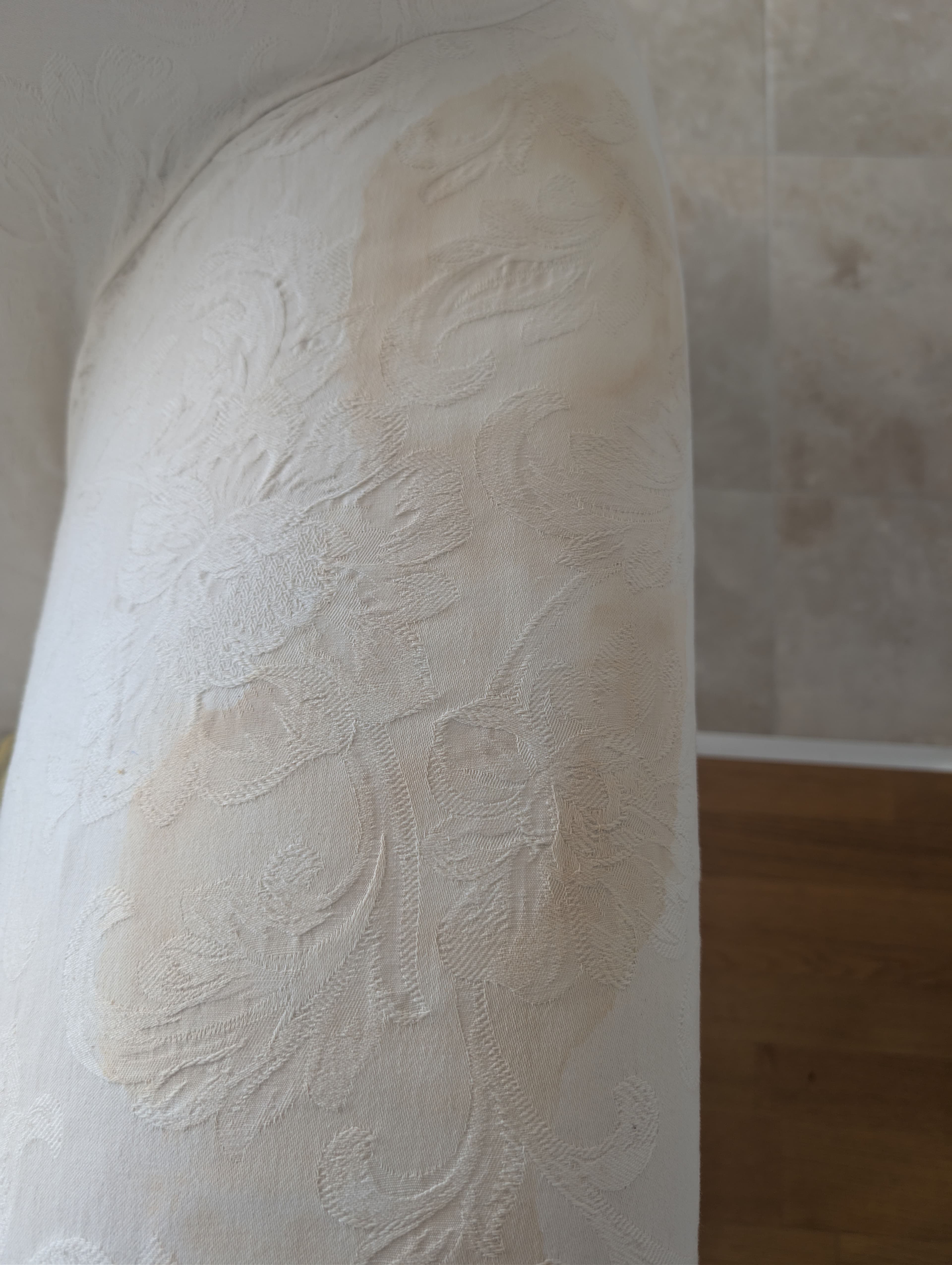
A brown mark on a pale sofa is easy to mistake for ordinary dirt. Sometimes it is surface soiling that a suitable upholstery clean can remove. In other cases, particularly on cotton, linen, viscose or rayon, the colour may have developed within the damp fabric itself. That problem is known as cellulosic browning—and repeatedly cleaning it as though it were dirt can make matters worse.
This article explains what cellulosic browning is, how it happens, what may help identify it, and why a specialist stain treatment is different from routine cleaning. It also tells the story of an expensive white cotton sofa that several cleaners had reportedly described as ruined.
What is cellulosic browning?
Cellulosic browning is a yellow, tan, reddish or brown discolouration associated with plant-based and regenerated cellulosic fibres. Consumer guidance from the IICRC explains that when materials such as cotton or linen become wet and dry too slowly, naturally occurring lignin or sugars can migrate towards the surface and leave visible discolouration.
The brown colour is therefore not necessarily a layer of soil sitting on top of the fabric. It may be the visible result of compounds moving through the fibre as moisture evaporates. Water rings caused by spills or unsuccessful spot-cleaning attempts can be related forms of browning.
How and why does it happen?
Cellulosic browning usually involves a combination of fibre type, moisture and drying conditions. It may follow a spill, water damage, humid storage, condensation during transport, over-wetting during cleaning, or a local spot treatment that has dried unevenly.
- Plant-derived fibres such as cotton and linen naturally contain cellulosic material and varying amounts of lignin or other soluble compounds.
- Moisture can dissolve or mobilise some of these compounds and carry them towards the fabric surface.
- Slow or uneven drying gives that migration more time to occur and can concentrate the discolouration at an edge or waterline.
- Over-wetting and unsuitable high-alkaline cleaning products can increase the risk or severity of browning on susceptible fabrics.
What does cellulosic browning look like?
No stain should be diagnosed from colour alone, but the following clues can justify a closer professional assessment:
- The fabric contains cotton, linen, viscose, rayon or another cellulosic fibre.
- The mark appeared after the item became wet, was stored in damp conditions or received a previous cleaning attempt.
- The discolouration is yellow, tan or brown, sometimes with a defined ring, tide mark or darker edge.
- The mark becomes more obvious, returns or spreads as the fabric dries.
Other problems—including soil wicking, tannin, dye transfer, oxidised residues, pet contamination and ordinary water marking—can look similar. Fibre identification, colourfastness testing, the history of the mark and its response to controlled testing all matter before treatment is selected.
Cleaning or stain treatment: what is the difference?
Professional upholstery cleaning is designed to remove suitable types of soil from the fabric while managing risks presented by the fibre, dyes, backing, fillings, trims and construction. A stain treatment is more targeted. It addresses a specific discolouration or residue with chemistry, moisture, dwell time and drying control selected for that particular problem.
If the brown colour has been produced by compounds migrating through a wet cellulosic fibre, ordinary cleaning alone may not address its cause. Simply adding more general cleaner and water may spread the affected area, create a new waterline or encourage further browning. A technician may need to combine cleaning and specialist stain treatment, but the sequence depends on inspection and testing.
What should you avoid trying at home?
Stop and seek advice before repeated experiments. Photograph the mark, find the care label if possible and make a note of what has already been used. In particular, avoid:
- Soaking the area, using a domestic steam cleaner or repeatedly rinsing it. Extra moisture and slow drying can enlarge a water mark or drive further migration.
- Strong alkaline household cleaners or washing products. High alkalinity can contribute to browning on susceptible cellulosic material and may affect dyes or finishes.
- Chlorine bleach, peroxide or an unknown stain remover. A brown mark can become permanent colour loss, weakened fibre or a pale patch that is harder to correct than the original problem.
- Bicarbonate of soda, washing-up liquid or repeated vinegar treatments. These are not a reliable diagnosis-led treatment for migrated cellulosic compounds; they can leave residues, alter pH and complicate later professional work.
- Hard scrubbing. Friction can distort the weave, abrade raised patterning, change the fabric texture or spread contamination without correcting the discolouration.
Why forum home remedies often fail
Most online recipes begin with the assumption that every brown mark is the same kind of stain. They rarely account for the fibre, dye stability, backing, filling, previous products, moisture level or drying conditions. A recipe that appears harmless on a synthetic carpet can behave very differently on a white cotton upholstery fabric. Never mix household cleaning products, and do not use an untested remedy simply because it worked on somebody else’s unrelated material.
Case study: the white cotton sofa that was thought to be ruined
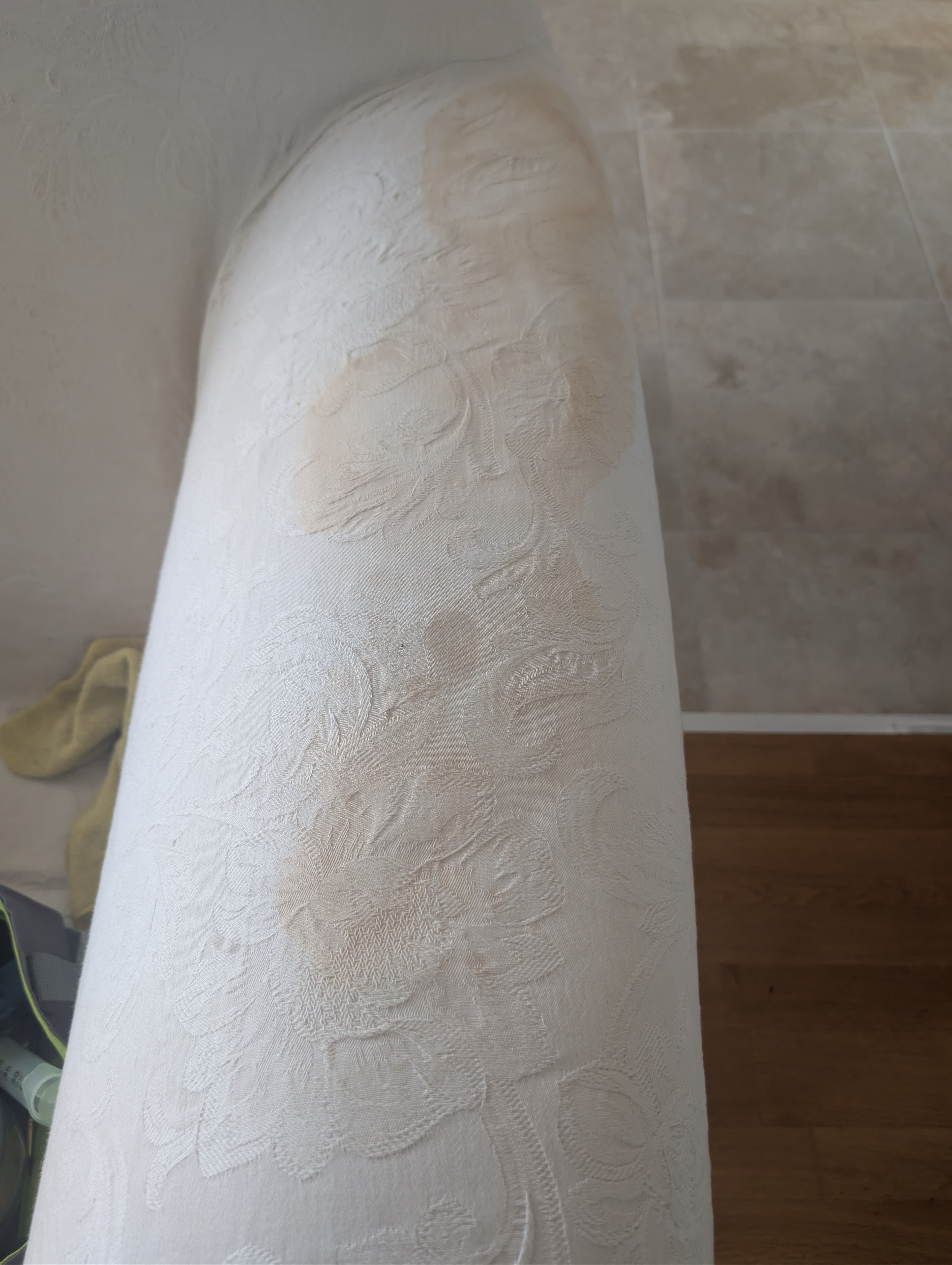
The customer owned a valuable white sofa upholstered in 100% cotton. It had been shipped back to the UK after she had been living in the UAE. During transit, the sofa may have become damp or wet, and a large brown area developed along one arm.
She had asked several cleaning companies whether anything could be done and had been told the sofa was ruined. Because it was expensive and otherwise worth keeping, she had continued using it with the affected arm covered.
George was at the property for an oven-cleaning appointment when the customer asked him to look at the sofa. From the fabric, history and appearance of the mark, he believed there was a strong prospect of correcting it—but, as with any specialist stain treatment, assessment came before promises.
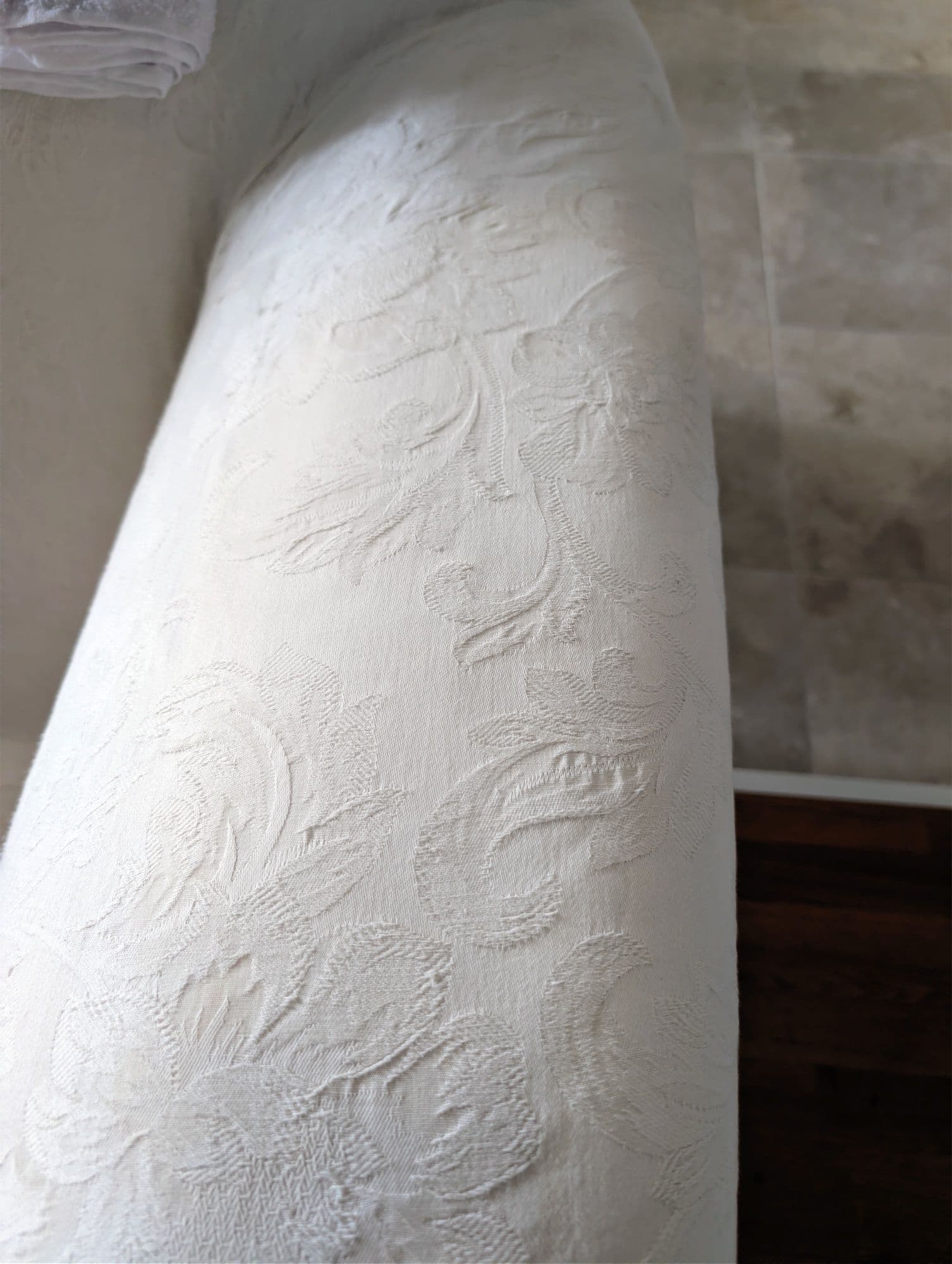
The treatment took nearly three hours. The aim was not to flood the fabric with general cleaner, but to work methodically on the brown discolouration while controlling moisture and monitoring the cotton upholstery. The visible mark was successfully removed, allowing the customer to uncover and enjoy the sofa arm again. She was over the moon with the result.
Can every brown upholstery stain be removed?
No responsible cleaner should promise that from a photograph alone. The result depends on the actual cause, fibre, dyes, fabric condition, previous attempts and whether permanent damage has already occurred. Some cellulosic browning can be corrected very successfully; other discolouration may improve rather than disappear, or treatment risk may outweigh the likely benefit.
The important first step is to stop experimenting and preserve the evidence: take clear photographs, provide the fibre label and explain when the mark appeared and what has already been tried. That information helps distinguish routine cleaning from a problem requiring specialist upholstery stain treatment.