

There is something very satisfying about looking at a damaged carpet, working out how to put it right, and helping someone keep a carpet they thought they would have to replace. A burn hole or a chewed doorway can look disastrous. Yet when the rest of the carpet is in good condition, that small area of damage may be repairable.
That is why I love repairing carpets. I enjoy the practical challenge, the attention to detail and the difference a careful repair can make. Recently, I had the opportunity to share that enjoyment with four other people—and one of them gave me a particularly proud moment just a week later.
How a conversation became a day of hands-on repairs
While attending a carpet dye course myself, I met a group of fellow attendees who asked whether I would teach them carpet repair techniques to help them develop their skills. That conversation led to a hands-on carpet repair course, which I taught on 25 September.
Three of the four had already attended repair training. They told me they still wanted more hands-on practice and did not yet feel confident taking on repairs themselves. People learn differently, and sometimes it takes more time working with the tools and materials for the technique to click. My aim was to give them that opportunity: practical experience, guidance and the chance to work through repairs themselves.
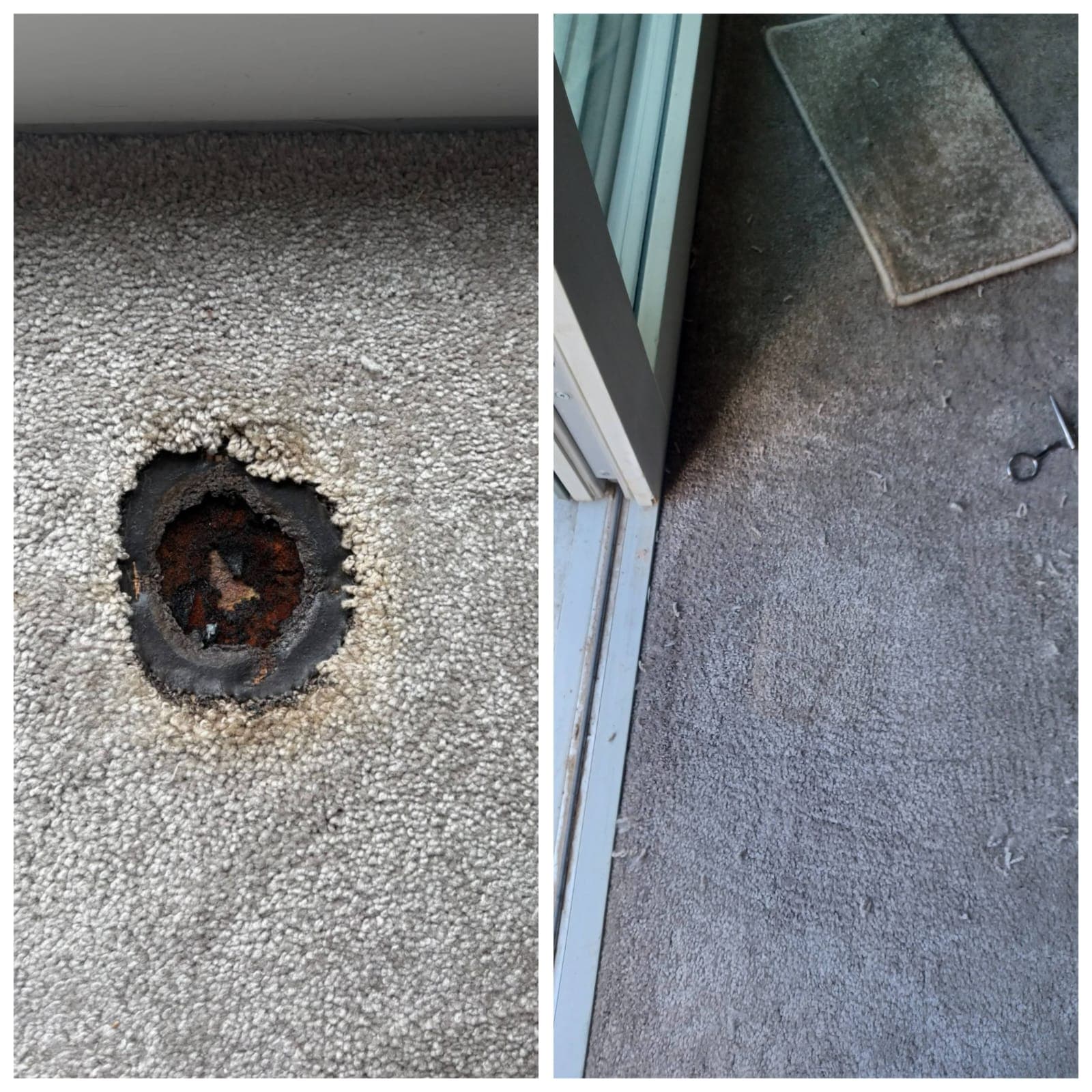
Seeing all four complete the day was rewarding. But the moment that really stayed with me came afterwards. Within a week, one of the attendees who had previously trained carried out his first repair: replacing a burn-damaged section using a donor piece of carpet.
I do not know what caused the burn, so I will not guess. What mattered to me was seeing him put his skills into practice so soon. Helping someone move from uncertainty to actually carrying out a repair is something I am especially proud of.
Why a small damaged patch need not mean a new carpet
If only a small section is damaged, replacing the entire carpet can mean discarding a lot of material that still has useful life left in it. It also brings the expense and disruption of choosing a replacement, arranging fitting and moving furniture.
A suitable repair deals with the affected area while keeping the surrounding carpet. It can cost less than full replacement and reduce the amount of material being thrown away. Whether it is the sensible option depends on the carpet’s overall condition, the damage and the availability of a suitable donor piece.
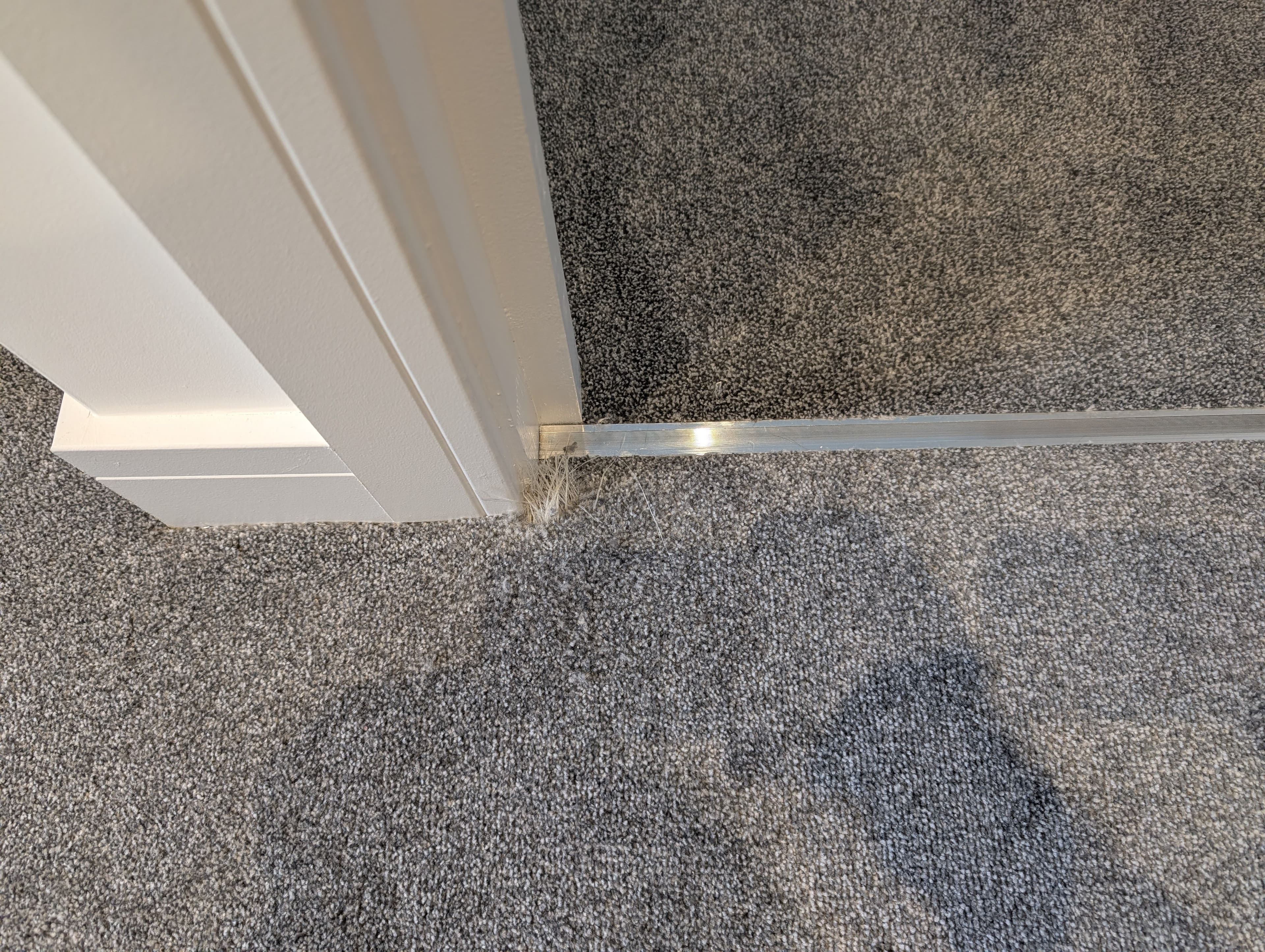
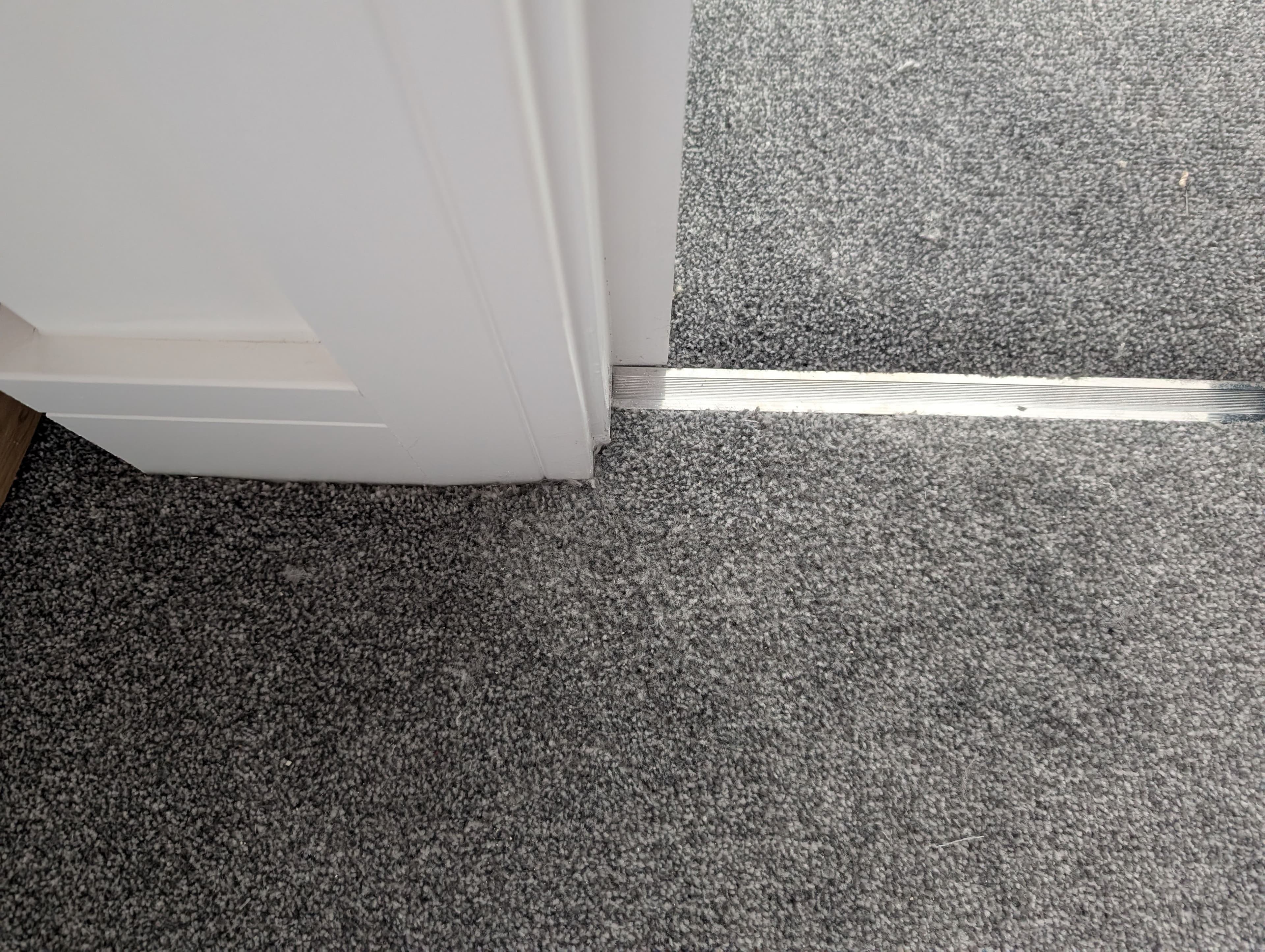
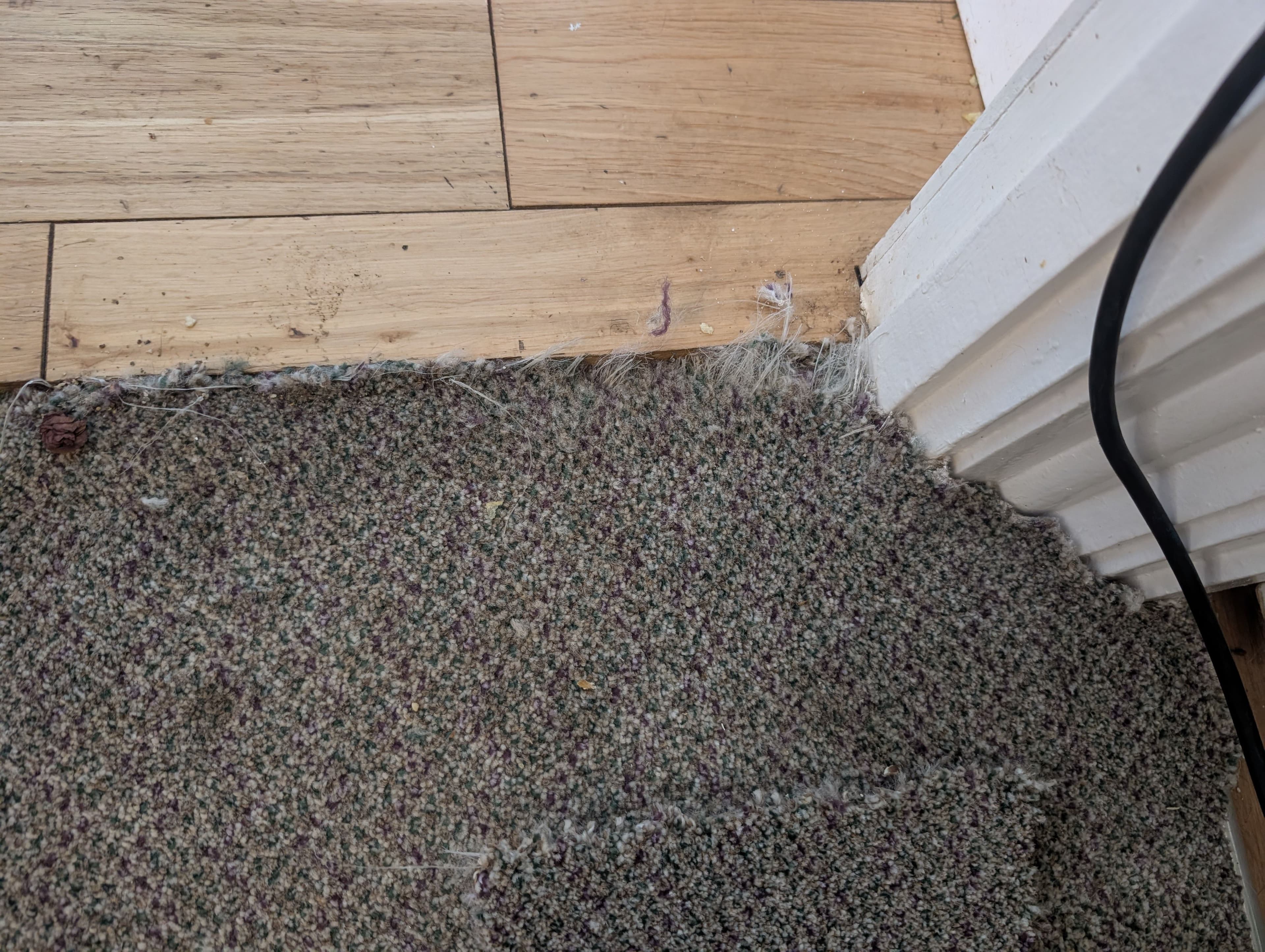
The two examples of my own work shown here involved pet damage at doorways. In both cases, I used donor pieces of carpet to replace the damaged areas. Doorways are particularly frustrating places for damage: the affected patch may be small, but you see it every time you enter the room.
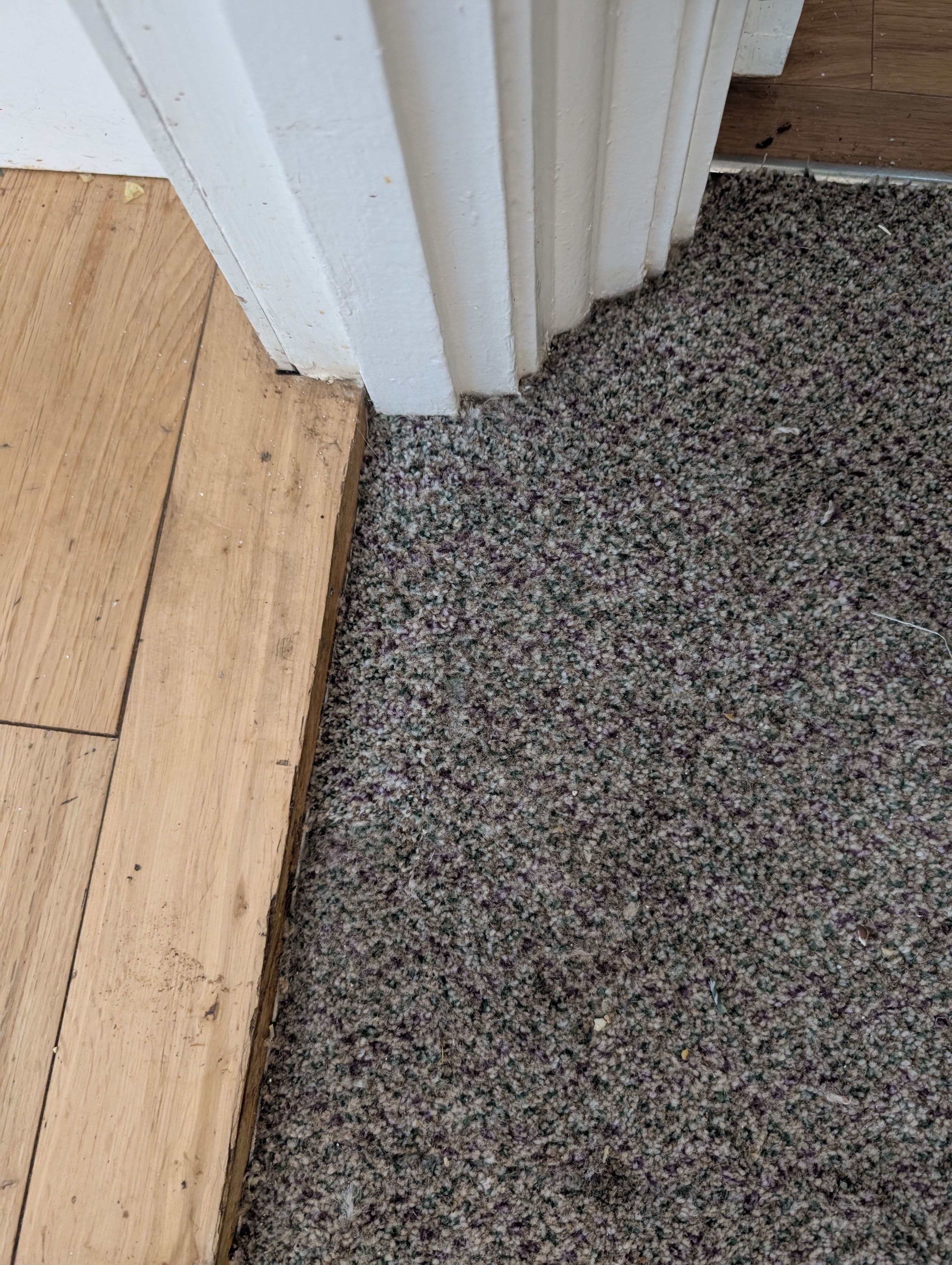
What is a donor piece of carpet?
A donor piece is the carpet used to replace the damaged section. A spare offcut from the original installation is often the best starting point because it is the same carpet. The pile direction, pattern and construction still need careful matching when the replacement is fitted.
If there is no offcut, it may sometimes be possible to take a piece from a less visible area, such as inside a cupboard. That needs to be discussed first, including what will happen to the area the donor piece comes from. A similar-looking carpet bought later is not automatically a suitable match.
My simplest advice: always save an offcut
When you have new carpet fitted, ask the fitter to leave you a useful-sized offcut. Keep the largest practical piece you have room for, rather than only a tiny sample. A repair needs enough material to cover the damage and allow for matching and fitting.
Label it with the room it came from and, if available, the carpet name, colour and fitting date. Store it clean and dry, away from direct sunlight and damp. Keep it flat or loosely rolled rather than tightly folded.
An unused offcut can still look different from a carpet that has faded, become soiled or worn over time. Nevertheless, having the original material available gives us a much better starting point if an accident happens.
Common causes of carpet damage
- Pets scratching or chewing: especially around doorways, edges and thresholds.
- Burns and melted fibres: from hot irons, dropped cigarettes, embers or hot styling tools.
- Snags and pulled loops: caused by claws, sharp objects or furniture catching the pile.
- Cuts and tears: during decorating, moving furniture or other accidental damage.
- Fraying edges and damaged joins: particularly in busy areas and at door bars.
- Permanent marks or colour loss: some spills or products damage the colour rather than the carpet fibres. These need assessment because cleaning, colour restoration or patch repair may be appropriate.
If you notice a pulled thread, avoid tugging it or letting the vacuum catch it. Keep pets away from a damaged area where possible, and seek advice before cutting out a patch or applying glue. A home repair attempt can make the eventual repair more difficult.
Can every carpet be repaired?
No. A carpet with widespread wear, deteriorating backing or extensive damage may be a better candidate for replacement. Even with a suitable donor piece, differences in wear, colour and pile can affect how closely a repair blends in.
My aim is a secure, carefully matched repair that improves the damaged area. I will explain what is realistically achievable rather than promise that every repair will be invisible.
Send me photos before you replace it
If your carpet has a burn, a chewed doorway or another small damaged area, send me some photographs before deciding to replace the whole carpet. Include a close-up of the damage, a wider photograph showing its position in the room, and let me know whether you have a spare offcut.
All repairs are individually priced according to what is required to carry out the repair. Photographs help me assess the likely options, although some details may need checking in person.
You can also read more about carpet patch repairs. Sometimes a small repair is all that is needed to keep a much-loved carpet in use—and that is exactly the kind of work I enjoy.